
SIRUMA, Camarines Sur—Joining a fishers organization was, at first, never about saving mangroves for Maria Luny Eboña.
She initially joined Samahan ng Maliliit na Mangingisda ng Matandang Siruma (SMMMS) to fight illegal fishing in this coastal town in Camarines Sur province.
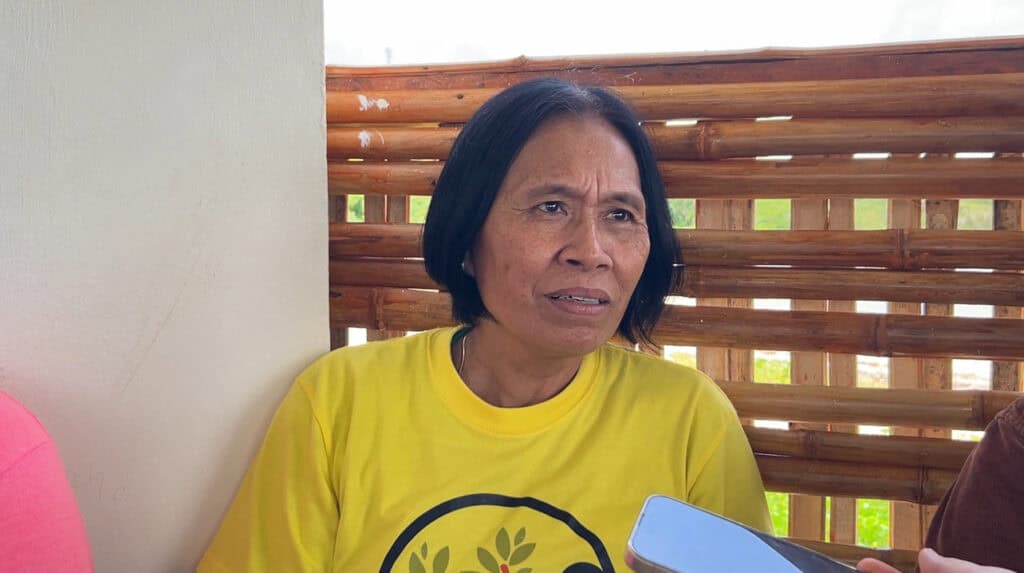
“Hindi naman talaga kami interesado noon. Naghanap kami ng makakatulong talaga sa amin na mapuksa itong illegal fishing sa Siruma, lalo na ‘yong dynamite fishing. Ngayon, wala na,” Eboña, 57, told BicoldotPH.
Joining SMMMS led her to volunteer as a sea patrol, confronting illegal fishers even at personal risk. This turned to mangrove protection.
Sustaining mangrove rehabilitation, however, has not been easy for Eboña and other Siruma women from various groups that are leading conservation efforts.
Award-winning
Mangroves are crucial in stabilizing marine ecosystems. Aside from serving as natural sanctuaries for diverse sea species, they also provide protection against destructive storm surges, flooding, and coastal erosion.
Mangrove forests are also highly effective in carbon absorption. Compared to upland trees, mangroves absorb more carbon, helping mitigate the climate crisis and filter pollutants to improve water quality.
With the Philippines being a gateway of damaging typhoons, a small community in Siruma, Camarines Sur, led mostly by women, has firmly stood its ground in safeguarding a local mangrove conservation area. This initiative recently earned recognition as a finalist for the national Para el MAR Awards 2025, which honors marine biodiversity conservation, community involvement, and sustainable management practices.
Siruma has already built a reputation as one of the Bicol Region’s leaders in mangrove conservation, winning the Best Mangrove Award in 2020, 2022, and 2024.
“Very proud kami. Hindi naman talaga sumagi sa isip namin na makakarating kami sa ganoong patimpalak,” Eboña said about their accolades.
A Decade of Rehabilitation
The town of Siruma has long been a partner of the Institute of Social Order (ISO), a non-governmental organization that strengthens fisherfolks groups across the country.
Forester Jerry Quitorio, ISO’s project coordinator, said mangrove rehabilitation began in 2014 with the support of Forest Foundation Philippines (FFP).
Between 2014 and 2018, ISO helped rehabilitate 103 hectares of mangroves, turning abandoned fishponds into thriving forests. In 2021, the municipality expanded its strategy by declaring a 197-hectare Mangrove Local Conservation Area (LCA) covering five coastal villages.
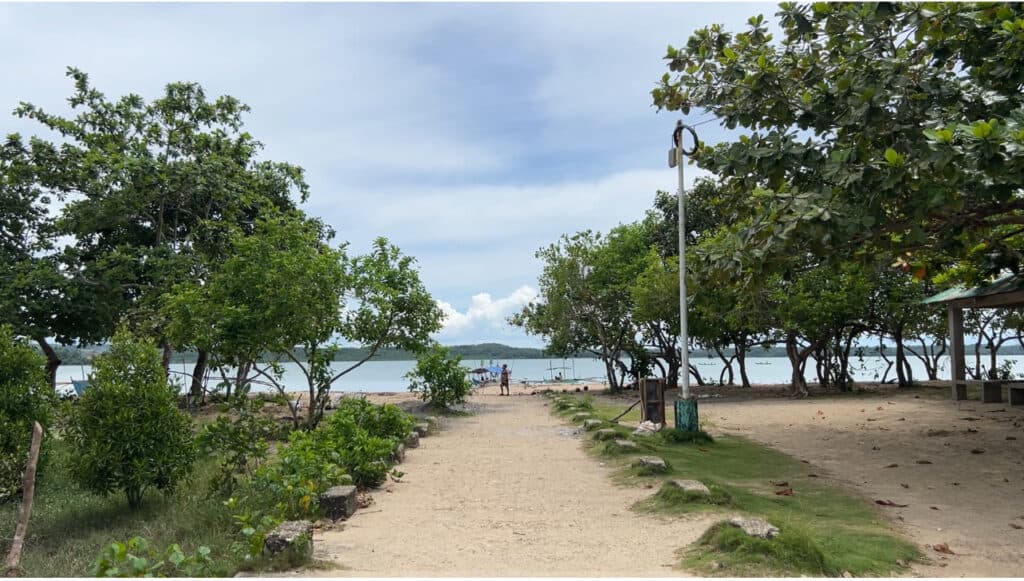
At its heart lies Gayon Park, home to the central nursery and Mangrove Learning Center.
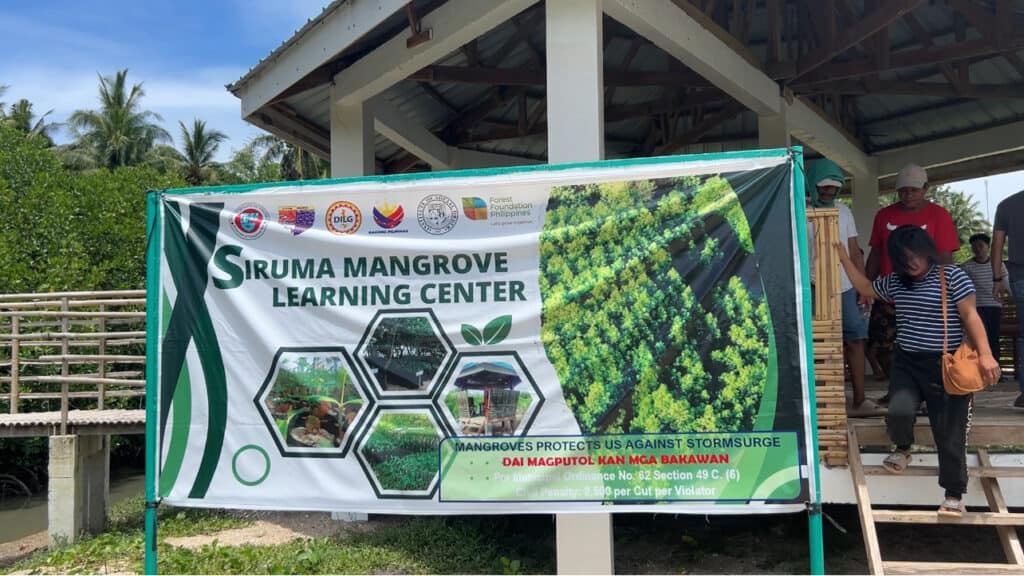
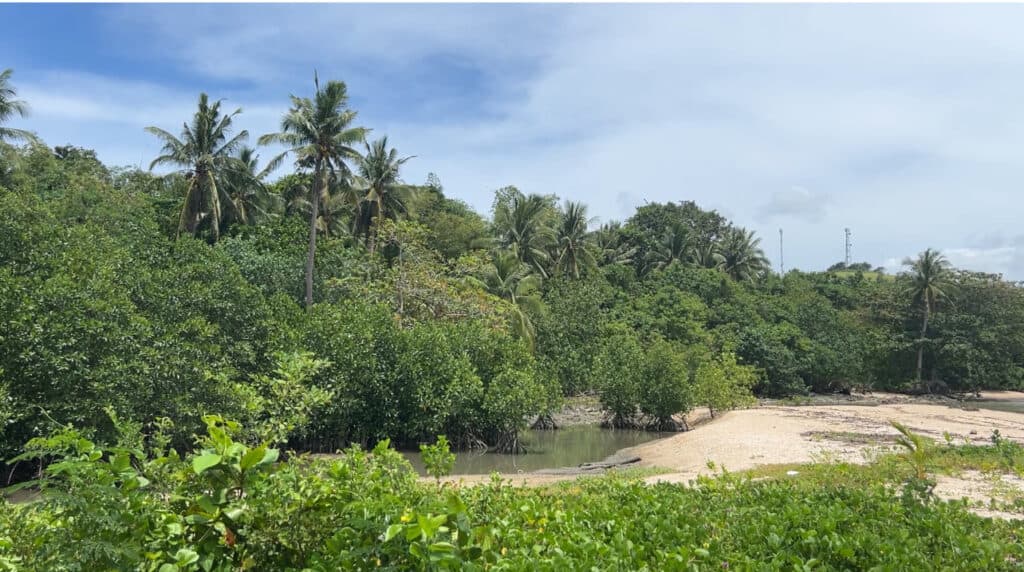
Seventy to 80 percent of the members of Siruma’s four partner organizations are women: SMMMS, Samahan ng Mangingisda ng Pamintan-Bantilan-Bahao (Sammapabba), Samahan ng Mangingisda ng Vito (SMV), and Samahan ng mga Mangingisda ng Penitan (SMP). They are now the frontliners in mangrove rehabilitation and protection.
“Right now, the community is really aware of the ecosystem services of mangroves and how they support their daily lives. It is a breeding ground for seashells, fish, and other species. People understand its value, so they are determined to protect it,” Quitorio told BicoldotPH.
Support
The groups make it a point to maximize the support they get from the local government unit (LGU) and NGOs.
However, they do not want to be over-reliant on they help they get from the Department of Environment and Natural Resources (DENR) and the Bureau of Fisheries and Aquatic Resources (BFAR).
“May tulong naman mula sa DENR at BFAR, pero hindi kami umaasa palagi sa kontrata. Alam namin na minsan lang ‘yan dumarating. Nasa puso na lang talaga namin ang pag-rehabilitate,” Eboña said.
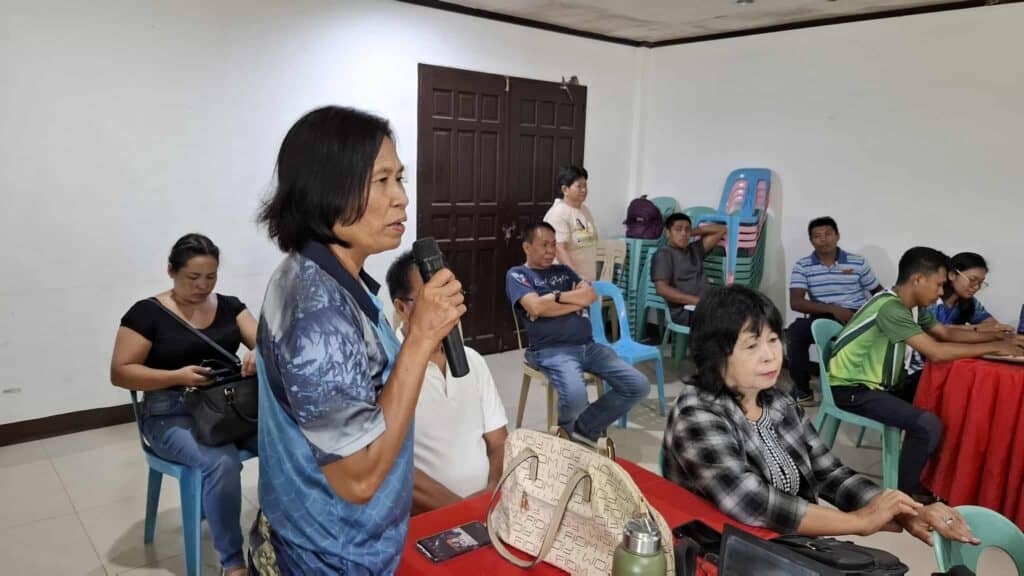
With support from ISO and the LGU, her group now helps manage the Mangrove Learning Center and nursery operations. SMMMS, accredited by the municipality, has 54 members, mostly women.
Teaching Children
Norie Balgemino Acebar, 58, of Sammapabba, started planting mangroves began in 2011. Since then, she has taught her children the importance of mangroves.
“Mahirap kasi putik, pero pagsama-sama, masaya pa rin kami. Pati mga anak namin sinasama na rin. Ang pinaka-purpose ay alam na ng mga bata kung ano ang mangroves at kung gaano ito kahalaga. Kasi dati, ang pagkakaintindi ng tao, puno lang siya,” Acebar said.
Mangroves now provide fruit that can be sold as seedlings, giving members a modest source of income while strengthening the coastal ecosystem.
Younger women are also joining. Mariel Pagao, 32, a housewife whose husband is a fisherman, said she helps in cleaning, maintaining the nursery, and planting.
“Maganda din po talaga ang makasama sa pagtatanim, kahit nakakapagod,” she said.
For Maryjane Anggo, 52, president of SMP, the value of mangroves is clearest during typhoons.
“Kahit papaano, ‘yong malalakas na alon at hangin humihina pag tumatama sa mangroves. Dumating man ang tubig-dagat sa pangpang, mahina na siya,” Anggo said.
She admitted that not all members remain active, but the group continues to encourage youth participation. Male community members also help with more physically demanding work like large-scale planting.
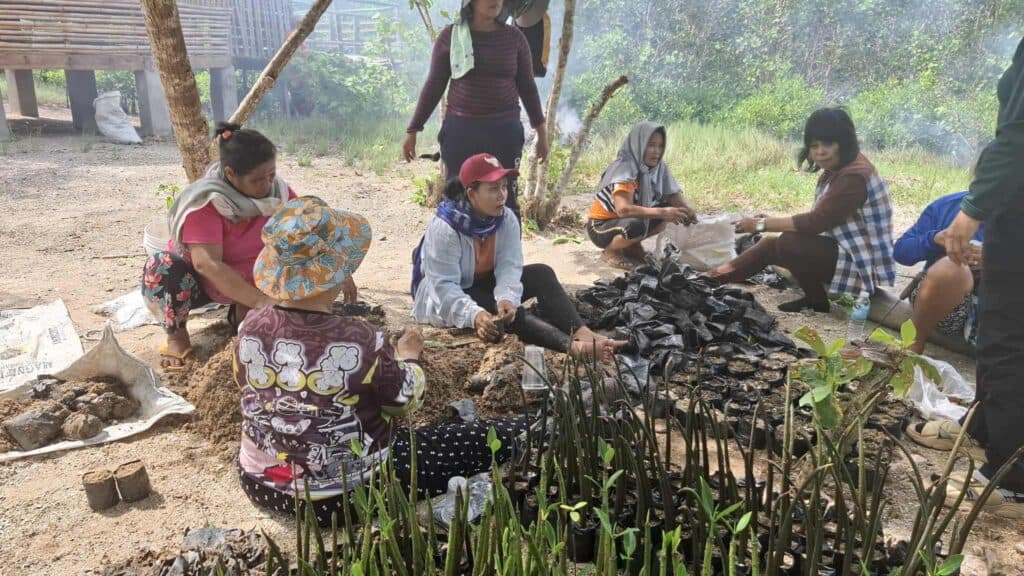
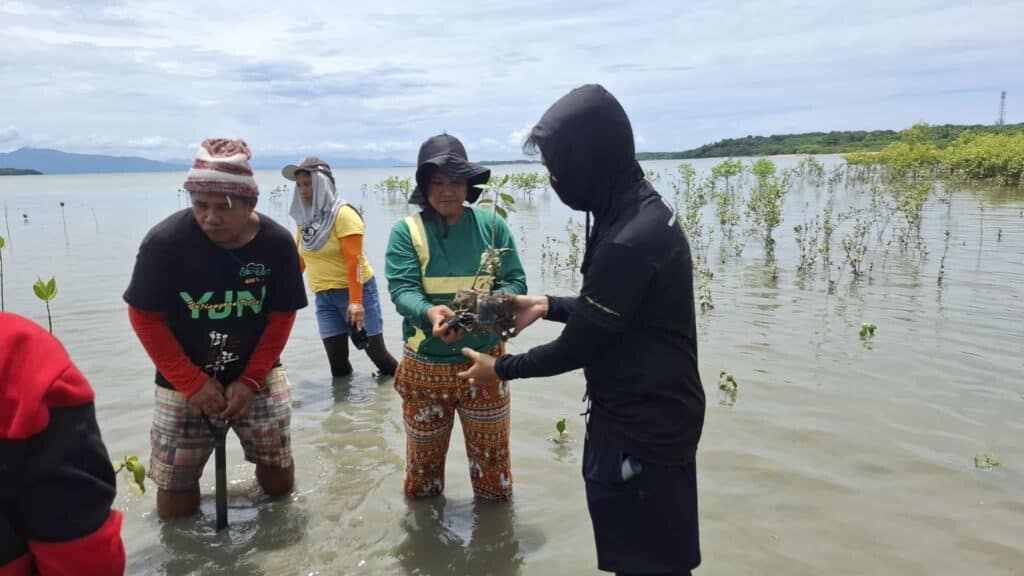
Another SMP member, Jinky Flores, said her concern for the environment inspired her to join.
“Nakita namin mismo, sa pagtatanim ng mangroves, hindi na bumabaha tulad dati. Natuto din kami sa trainings—kung paano mag-conserve at paano makilala ang iba’t ibang species,” Flores said, recalling learning trips to conservation areas in the provinces of Quezon and Albay.
New Challenges
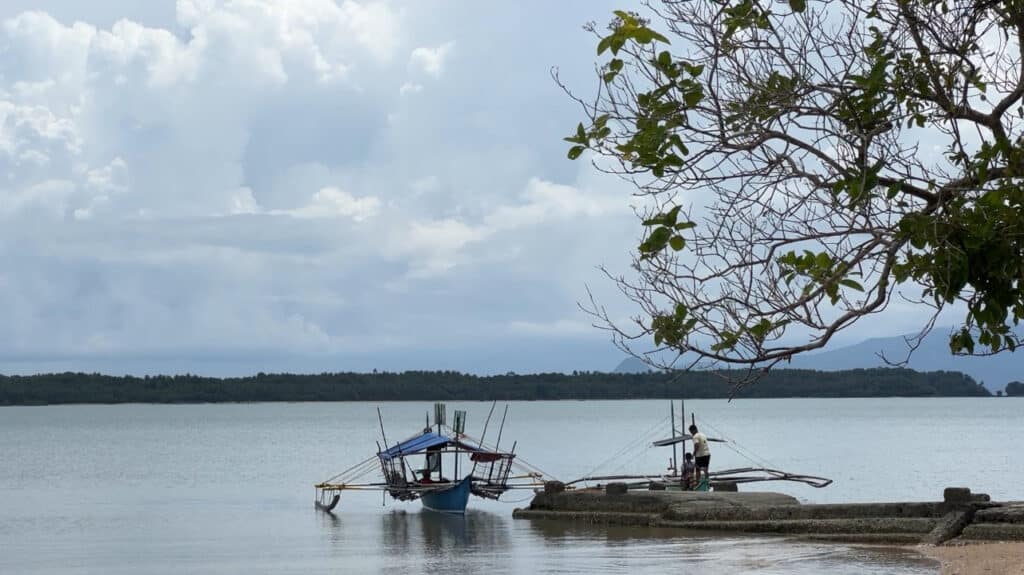
With recognition comes new challenges. Plans to build wind turbines along San Miguel Bay, a major fishing ground, are worrying local fisherfolk.
“Maganda ang windmill bilang renewable energy source. Pero ang issue ay displacement. Kung saan sila itatayo, doon mismo sa fishery management area at biodiversity zone,” Quitorio said.
Tourism, too, is a double-edged sword. Siruma’s growing popularity has boosted livelihoods but also brought waste management problems. The LGU is working on a residual containment area, but unplanned resorts risk driving up food prices and threatening local food security.
“Iyon ang problema sa resorts. Dahil sa boom ng turismo, tumataas ang bilihin. Pero ang income ng locals mababa pa rin,” Quitorio said.
Illegal mangrove cutting and conversion of fishponds persist. Many members of people’s organizations are also aging, while younger residents often leave for school or jobs outside Siruma. Sustaining community-led conservation will require intergenerational commitment.
Why This Matters
The Philippines has lost nearly a third of its mangroves, down from 450,000 hectares in 1920 to around 311,000 today, due to conversion, coastal development, and overexploitation.
Siruma, however, remains a biodiversity hotspot, hosting 25 mangrove species that sustain the livelihoods of its 4,000 registered fisherfolk. The mangroves shelter mudskippers, crabs, shrimps, birds, mammals, amphibians, and seashells, all of which form the backbone of local subsistence.
By protecting mangroves, Siruma’s women frontliners are not only restoring a critical habitat but also building a frontline defense against stronger typhoons and rising seas. Their work demonstrates that community-driven, women-led conservation can anchor climate resilience—one seedling, one coastline, and one generation at a time.
“Siguro ang strength nila ngayon ay participatory governance. At technically equipped na sila—marunong na mag-identify ng mangrove species at mag-manage ng conservation area,” Quitorio said.
Funding disclosure: This work was supported by WAN-IFRA Women in News. This story reflects the author’s perspective and not those of WAN-IFRA Women in News.
